
I’m not the first person to point out that Commander—the 4-person Magic: The Gathering format where a legendary creature spearheads your deck’s theme and strategy—is more about socialization than actually winning. Yes, there’s the inevitable competitive scene, but that’s not how most people play. It’s common courtesy during a Commander game to give your opponents time to at least perform their deck’s function. Ideally, that time will be the moment before you snatch victory from them through your own politicking, resource-gathering, and mastery of literary magic (seriously, these cards get super wordy). As such, Commander is a great format for self-expression: if everyone has a cavalier attitude towards optimal play, you can create a pile of cards that lets you schmooze your way into victory, or gives your opponents a big stick to whack each other with, or just has ladies looking left.
So how would famous literary figures express themselves this way? If they built a deck that encapsulates who they are as a person, what would it look like? I’m excluding any literary or graphic art figures already depicted in Magic’s Universes Beyond sets, such as Frodo Baggins, Peter Parker, and (technically) Frankenstein’s Monster. This is because 1) it’s too easy, and 2) I find Universes Beyond so cringeworthy that it’s the main reason I stopped buying cards. That said, I can’t deny the personal appeal of matching pop culture characters to your other interests, as the below images will show. One important distinction separates this blog post from UB: this thought exercise isn’t “what if The Great Gatsby was a Magic card?” Instead, it asks “if The Great Gatsby played Magic: The Gathering, what type of Commander deck would he play?” It’s a lot like Amos Byrne’s Diabolic Intent series. All the below card texts already exist in the world of MtG, I just painted on them a different IP, which is what I would’ve preferred UB to be TBH IMHO LMAO.
Don Quixote (from his eponymous novel)

His Commander: Tori D’Avenant, Fury Rider
His Strategy: He’d play a bunch of knights, natch. But those would be ornamental to his main quest: to win by making a Truefire Captain a Pariah before attaching her to a Wheel of Misfortune. He has never survived a game long enough to make that plan work, but it will be so cool when it happens!
Aeneas (from The Aeneid)

His Commander: Rocco, Street Chef
His Strategy: As appropriate for the son of Aphrodite, Aeneas would employ the tactics of Group Hug, giving other players free cards and spells as to bribe his way into fated victory. If his opponents aren’t careful, though, they can anger Aeneas into abandoning this strategy and pulverizing them with a massive creature. Him and his men aren’t above eating artifacts as food either.
Hari Seldon (from the Foundation series)

His Commander: Aminatou, the Fateshifter
His Strategy: Either talking in lengthy monologues or staying silent for several turns, Hari tries to control everyone’s future with a Lantern Control lock, ensuring only he draws good cards through (what seems like) literary magic and miraculous foresight. He’ll claim all his misplays are part of his ingenious future plan. His commander’s last ability ensures that he’s got a backup society on some other planet if he needs it.
Meursault (from The Stranger)


His Commander: Rune-Tail, Kitsune Ascendant / Rune-Tail’s Essence (another deck he plays: The Walls of Ba Sing Se)
His Strategy: He has no win condition in his pile of cards; what would be the point? Like any good Pillowfort player, Meursault’s deck will encase himself in so many protections and preventions that other players won’t bother trying to interrupt his game of Magic Solitaire. He prefers single-player games and doesn’t like Commander anyway, which he’ll happily divulge to the group in the fourth hour of the current game.
Rodion Romanovich Raskolnikov (from Crime and Punishment)

His Commander: Greven, Predator Captain
His Strategy: Raskolnikov attempts a overcomplicated plan that requires him to deal lots of damage to himself before he can “prove his worth” by sacrificing others. He pretends not to pay attention to what’s happening on the board, but he’ll pay back any perceived offense with disproportionate retribution and probably random shouting too.
Kvothe (from The Kingkiller Chronicle)

His Commander: Codie, Vociferous Codex (another deck he plays: Jodah, Archmage Eternal)
His Strategy: Even though he’s too poor for a board presence, Kvothe’s commander still triggers immediate hostility from any other players once it’s cast. And that lack of sympathy is justified: if given even a slight chance, his commander will cheat in impossibly massive, game-ending spells from his pile of cards in typical Mary Sue fashion. He said he’s building another deck but he hasn’t so much as updated a decklist in 15 years (not that I’m bitter or anything).
Coriolanus Snow (from The Hunger Games series, in particular The Ballad of Songbirds and Snakes)

His Commander: Lynde, Cheerful Tormentor
His Strategy: His deck is evil, but at least he’s polite about how he plays it! He only uses targeted removal spells and strikes deals with everyone to make sure the arenas he inflicts on certain players best maintains the balance of power. And what other plan would you expect from him besides forcing his opponents to attack each other instead of him?
Dorian Gray (from his semi-eponymous novel)

His Commander: Teysa, Envoy of Ghosts (other decks he plays: Nira, Hellkite Duelist; Myrkul, Lord of Bones)
His Strategy: Just a deck stuffed to the brim with cards that prevent him from losing the game as long as they stick around. Dorian likes winning, but absolutely despises playing (insert arch, witty laughter here).
James (Jim from Huckleberry Finn as interpreted by Percival Everett)
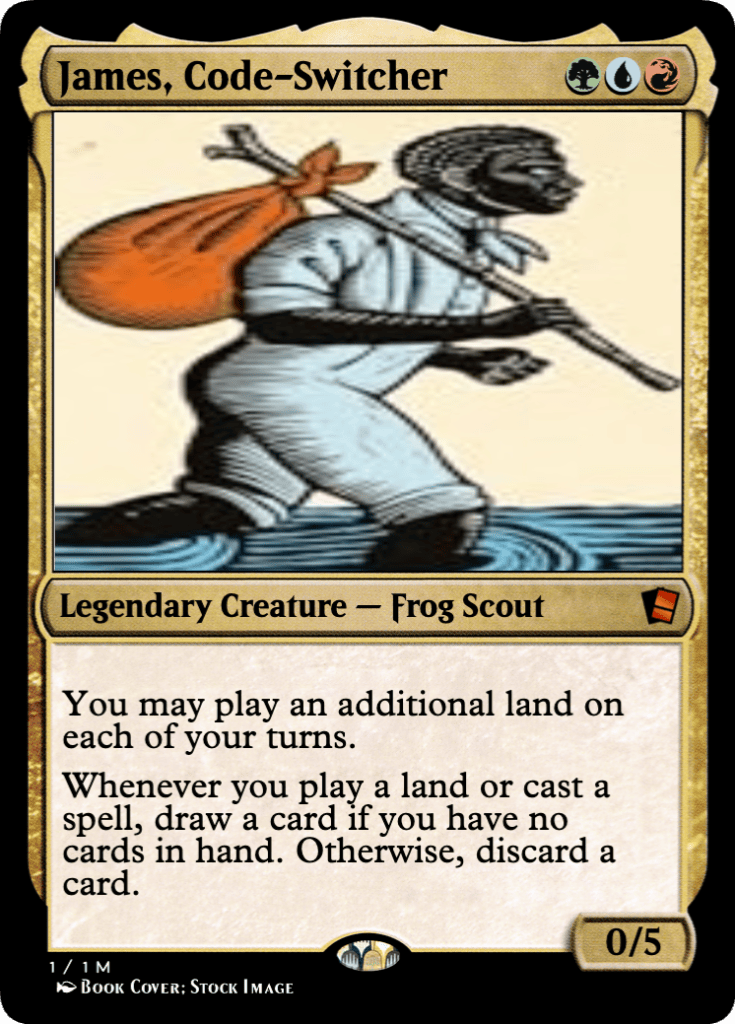
His Commander: Flubs, The Fool
His Strategy: Despite the epithet on his commander, James only pretends to be stupid in classic Art-of-War fashion. He plays on the highest competitive levels and makes decisions like his life depends on it. At the end of games, whether he wins or loses, he chews out the table for being malicious idiots who think he’s dumb, even though no one’s fooled by his act nowadays.
Luo Ji (from the Remembrance of Earth’s Past trilogy)

His Commander: Narset, Jeskai Waymaster
His Strategy: Luo Ji performs a bunch of crazy combos with his deck, but none of them win the game—they seem to exist mostly for his own amusement. If he does win, it usually happens indirectly, or because everyone else quit the game since it’s past midnight on a weekday.
Other Literary Magic Characters
- Ged/Sparrowhawk so obviously plays Arcanis the Omnipotent that it’s not worth elaboration (other than to say this: if you get a hankering to read or reread YA fiction involving a wizard school, the right answer is always The Earthsea Cycle).
- Another no-brainer: Emiel the Blessed is the only correct commander for The Last Unicorn. My two cents is that she’d play Stax and not understand why everyone’s trying to hunt her down.
- Paul Atreides plays the same strategies as Hari Seldon but he’s way more patronizing about it.
- Humbert Humbert is too neurotic/passive to play Commander, but for some reason he’s really into collecting the Hatsune Miku / My Little Pony / Stranger Things Secret Lairs.
- We would’ve started a game an hour ago, but we need Godot here to make this table a 4-person pod.
If you suggest a literary Magic: The Gathering commander and decklist in the comments, I’ll add it to this post and include a link to your chosen personal profile!